How to Receive Payment From a US Client in Nigeria
You have finished the project. The client is happy with the work, and now they need to pay you. Then comes the question: “Can you send me your bank details?”
If you are in Nigeria, that question can lead to a bit of back and forth. Your client may be used to paying contractors through a US bank transfer, while your regular Nigerian bank account may not be the easiest way for them to send dollars.
The good news is that you have options. You can receive money through a USD account that supports payments from US banks, use an international payment service, or arrange a transfer to an eligible domiciliary account. The best choice depends on how your client pays, the fees involved and what you want to do with the money after it arrives.
For many freelancers working with US clients, having USD account details they can share with the client is a practical place to start.
1. Ask your client how they normally send payments
Before opening an account or sending payment instructions, ask one simple question:
“Do you normally pay contractors by ACH transfer or wire transfer?”
This matters because the two are not the same.
- ACH transfer: A payment sent through the US Automated Clearing House network. Businesses commonly use it for domestic payments, including contractor payments. Your receiving account must support ACH.
- Wire transfer: A bank-to-bank transfer that can be sent within the US or internationally. The details and charges differ depending on the type of wire and the banks involved.
Your client may also use a payment platform or their company’s payroll system. Find out what their finance team can actually use. It is easier to agree on a payment method before the invoice is due than to discover at the last minute that the client’s preferred option is not supported by your account.
2. Receive the payment into a Palremit USD account
If your client can pay by ACH, you can check whether your Palremit USD account is suitable for receiving that payment. Palremit’s USD account is designed for eligible users to receive payments, make transfers and exchange currencies.
The idea is straightforward: instead of asking your client to send dollars to your regular naira account, you provide the eligible USD account details shown in your Palremit account. Your client uses those details to send the payment through a supported transfer method. Palremit’s published USD account terms confirm that ACH transfers are supported, but you should check the current fee and transaction limits in the app before agreeing on the payment route.
How to receive a payment
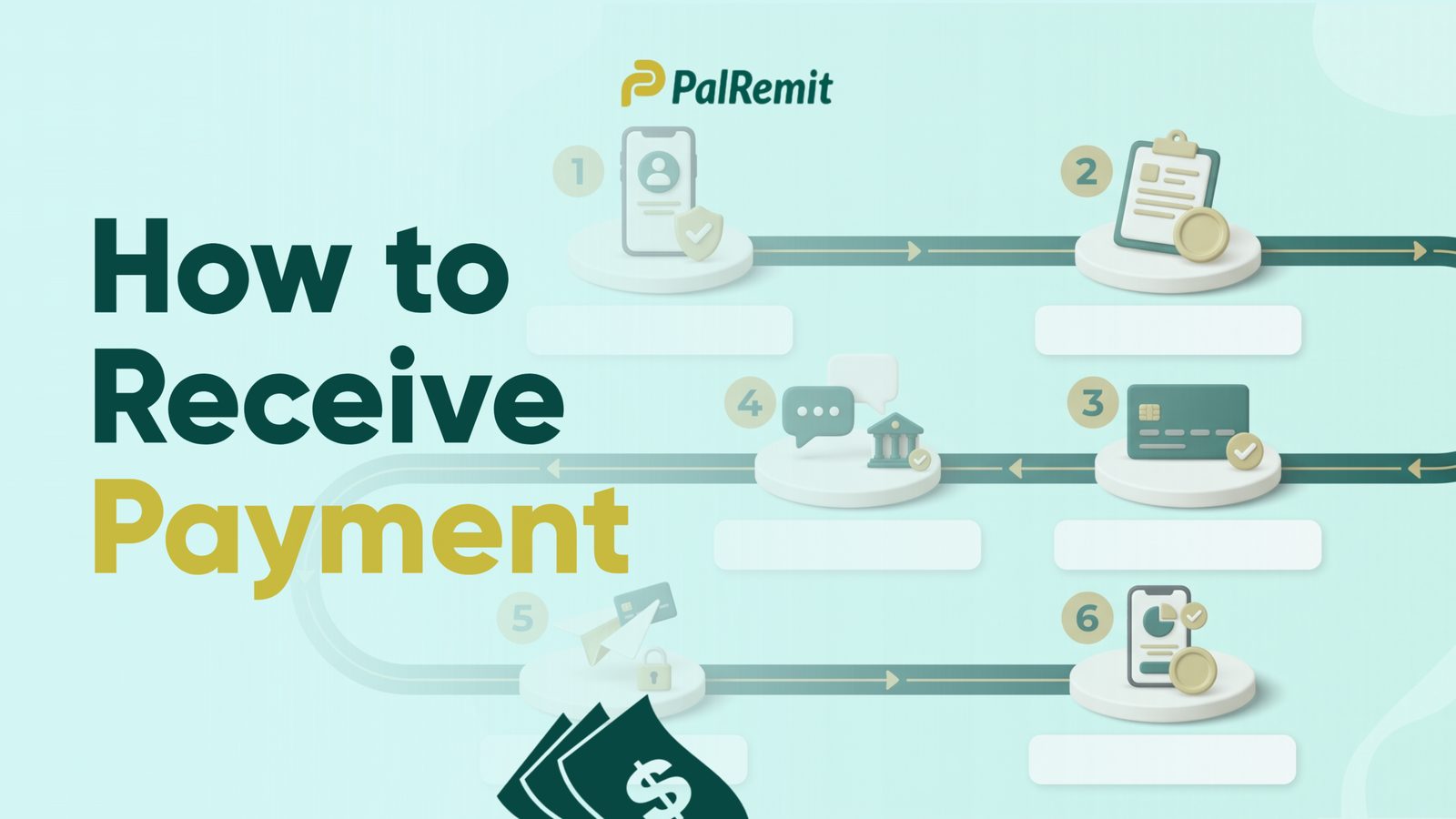
- Create your Palremit account. Sign up and complete the identity checks required for your account.
- Apply for a USD account. Follow the USD account application process in Palremit. Account access is subject to eligibility and verification.
- Get your account details. Once your USD account is approved, open the account details in the app and check the payment information provided.
- Confirm the payment method with your client. Palremit’s USD account terms confirm ACH transfers are supported. Before sending the details, make sure your client is paying through a supported method and follows the instructions displayed in your account.
- Send the details securely. Share the relevant account information with your client or their finance team. Make sure the beneficiary name is entered exactly as it appears in your account.
- Wait for the payment and check your balance. Processing time can depend on the sending bank, transfer method and any review required. Check your Palremit account for the payment rather than relying only on a screenshot or a payment notification from the client.
Once the money arrives, you can manage it using the supported features available in Palremit. For example, you can hold your USD or exchange it into another supported currency when you need to. Check the rates and fees displayed in the app before making a conversion or transfer.
Want to set up your account? Create a Palremit account.
One thing to confirm before you invoice: Palremit’s USD account terms state that ACH transfers are supported. Do not assume that every USD account supports every kind of wire transfer. If your client only pays by wire, contact Palremit support first and confirm whether the exact wire type they intend to send can be received.
3. Other USD account providers you can compare
Palremit is one option. You may also come across services such as Raenest and Cleva when looking for ways to receive dollars in Nigeria.
These providers offer USD account details to eligible users, but their supported transfer types, fees, limits and account conditions are not necessarily the same. For example, their help-centre documentation describes different options for ACH and wire deposits. Check the current terms directly with each provider before choosing one.
When comparing them, do not stop at “Does it give me a US account number?” Ask:
- Can it receive the specific payment method my client uses?
- What fee will be deducted when the money arrives?
- Are there limits or extra checks for business payments?
- Can I keep the money in USD?
- What will it cost to convert or withdraw the money later?
- What documents might I need if the payment is reviewed?
The account that looks easiest to open is not automatically the best one for your work. Choose the one that fits how your client pays and how you plan to use your earnings.
4. Can you receive the money in your Nigerian bank account?
You may also be able to receive an international transfer through a Nigerian bank account that is set up to accept foreign currency, such as an eligible domiciliary account.
This can work when your client is comfortable arranging an international bank transfer and your bank provides the required incoming-payment instructions. However, international wires can involve charges from the sending bank, intermediary banks and the receiving bank. Ask your bank for its current requirements and fees before giving the client your details.
Also, make sure you understand whether the account will receive the funds in dollars or convert them. If you want to keep your earnings in USD, confirm that before the client sends the payment.
5. What should you send your US client?
Once you have chosen a payment route, make the process easy for the person paying you. Send a clear invoice with:
- Your name or registered business name.
- Your client’s name and business details.
- A short description of the work delivered.
- The amount due and currency (for example, USD).
- The invoice date and payment due date.
- The payment method and the exact account details required for that method.
- Any agreed arrangement about who pays transfer charges.
For an ACH payment, the client may ask for the beneficiary name, account number and routing number. Other transfer methods may require additional information. Copy the details directly from your provider’s app or official instructions. Do not guess a bank address, routing number or SWIFT code.
If this is a new client or a large project, agree on milestones and payment dates in writing. Depending on the work, you may also agree on an upfront deposit before starting. That is a business decision to settle with the client, not a payment rule that applies to every contract.
6. ACH or wire transfer: which should you choose?
If your client can use either method, ask for the total cost and expected delivery time before deciding.
| What to compare | ACH transfer | Wire transfer |
|---|---|---|
| Typical use | Domestic US bank payments | Domestic or international bank payments |
| Details usually needed | Account number and routing number | Bank and beneficiary details, which may include SWIFT information |
| Cost | Often less expensive for routine domestic payments, but provider fees still apply | Can involve sending, intermediary and receiving-bank charges |
| What to confirm | That your account accepts ACH | That your account accepts the exact type of wire being sent |
There is no point choosing a method because it sounds faster if your receiving account does not support it. Confirm compatibility first, then compare the total fees and timing.
7. How to avoid payment delays and scams
A payment problem can turn a good client relationship into a stressful one. A few simple checks can prevent avoidable issues.
- Check the account name. The client should use the beneficiary name shown by your payment provider. A mismatch can cause a transfer to be delayed or returned.
- Use account details issued to you. Do not receive client payments through a stranger’s account or let someone use your account to collect money.
- Confirm the transfer type. An ACH transfer, a US domestic wire and an international SWIFT transfer are different. Make sure the receiving account supports the one your client is sending.
- Agree who pays the charges. If the client is expected to cover transfer fees, put that in writing before the payment is sent.
- Verify the money in your account. Do not treat a screenshot, email or payment receipt as proof that funds have arrived.
- Be careful with overpayments. If someone sends more than the invoice amount and asks you to refund the difference to another account, stop and verify the payment with your provider first.
- Keep your records. Save the invoice, payment confirmation and relevant client correspondence.
If a payment is delayed, ask the client for the bank’s transfer confirmation or reference number. Contact your receiving provider through its official support channel and follow its instructions. Never share your password or one-time verification code with someone claiming they can release the payment.
So, what is a practical way to get paid by a US client?
Start with the way your client prefers to pay. If they use ACH, compare USD accounts that support ACH and look at the full cost of receiving and later using the money. If they only send wires, confirm wire compatibility and charges before you share your details. If you prefer to receive foreign currency through your bank, ask your bank what its domiciliary account requires.
For freelancers who want to receive eligible USD payments and manage their money from one app, Palremit is worth considering. You can apply for a USD account, share the supported payment details with your client, and manage the funds after they arrive. The exact options depend on your eligibility and the features and fees currently available in your account.
Getting paid should be the easy part of finishing a project. Agree on the method early, send accurate payment details, and make sure you know what it will cost before the money moves.
Sources and verification
- Palremit USD Account Terms of Usage: account eligibility, service description and ACH support.
- Cleva Help Centre: Receiving USD deposits: an example of the ACH, wire and other deposit methods offered by another provider.
- Raenest Help Centre: About your USD account: an example of account details and supported transfer types at another provider.
Payment methods, eligibility, fees and processing times can change. Check the latest terms in your provider’s app or help centre before sending or receiving a payment.